Table of Contents
Shopify SEO is one of the most important strategies for growing an ecommerce store and increasing organic traffic from Google. It helps Shopify store owners optimize product pages, improve website speed, target the right keywords, and create a better user experience for visitors
What Is Shopify SEO and Why Does It Matter?
When you have a Shopify store you want people to find it when they search for things on Google. So you need to do something called Shopify SEO. This means you make your Shopify store better so it shows up higher in search results. You do things like find the words people use when they search, make your content better make your pictures smaller so they load faster and make your website easier to use. The main idea of Shopify SEO is to get people to visit your store without having to pay for ads all the time. If you do Shopify SEO right your store will show up higher in search results people will trust you more they will know your brand better. You will get more sales over time because people find you when they search on Google.
How Shopify SEO Helps Increase Organic Traffic
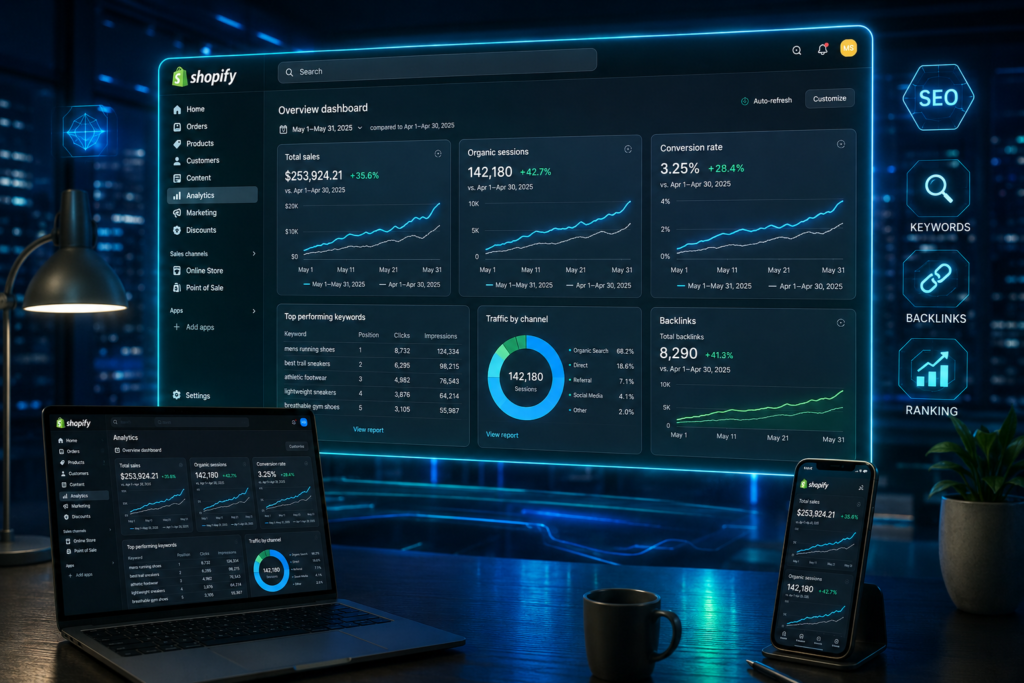
The Shopify SEO is used to optimize the store pages in order to enhance the understanding of the search engines about those pages. By optimizing the product titles, descriptions, URLS and images through the use of relevant keywords, Google will be able to link your content to the searchers who are looking for products on the internet. As a result, the probability of having high rankings in search results will be enhanced while targeting the people who have interest in the offered products.
Why Most Shopify Stores Fail to Rank on Google
Most Shopify stores do not rank well on Google. This is because they do not follow SEO steps. They focus on store design or paid ads.
Common problems include:
Using the product descriptions for many products
Not using the right keywords
Having a slow website
Broken links on the site
Low quality content
Is Shopify Good for SEO?
Shopify is a choice for people who want their online store to show up on Google. It has a lot of features that help with this. For example it has themes that work well on phones, fast hosting and security to keep everything safe. Shopify also gives you the ability to customize the title of your pages. It automatically generates a map of your site. This is all important for getting your store to show up on Google and other search engines.
Shopify is also an option for people who are new to running an online store because it is easy to use. You do not need to know how to write code to manage the parts of getting your store to show up on search engines.
Built-In Shopify SEO Features Explained
Shopify has some useful tools that help your website show up better in search results. It creates a list of all the pages on your website this is called an XML sitemap and this makes it easy for search engines to find them. You can also change the title and description that people see when they search for something.
Shopify makes sure all the stores on its platform have a connection, which is very important for people who visit your website.
Shopify SEO Pros and Cons
Shopify SEO is really easy to use. It is great for people who are just starting out. People who own stores can easily make their products show up better write blog posts and take care of Shopify SEO settings without knowing a lot about technology. Shopify also gives you a place to host your store it loads fast and it is very secure which all helps your store show up higher in search results. But Shopify SEO has some problems like you can not change the web address of your pages much as you want and there are not as many ways to customize your store as there are with something, like WordPress. With these problems Shopify SEO is still one of the best ways to make your online store show up in search results.
Common SEO Mistakes Shopify Users Make
- Shopify users often make mistakes with search engine optimization that stop their stores from doing on Google.
- A big problem is using the product descriptions that suppliers give them. They also do not do keyword research. They upload big pictures that are not optimized which makes the website slow.
- Store owners sometimes forget to make their titles and descriptions better and they do not use alt text. This makes it harder for people to find them when they search on Google.
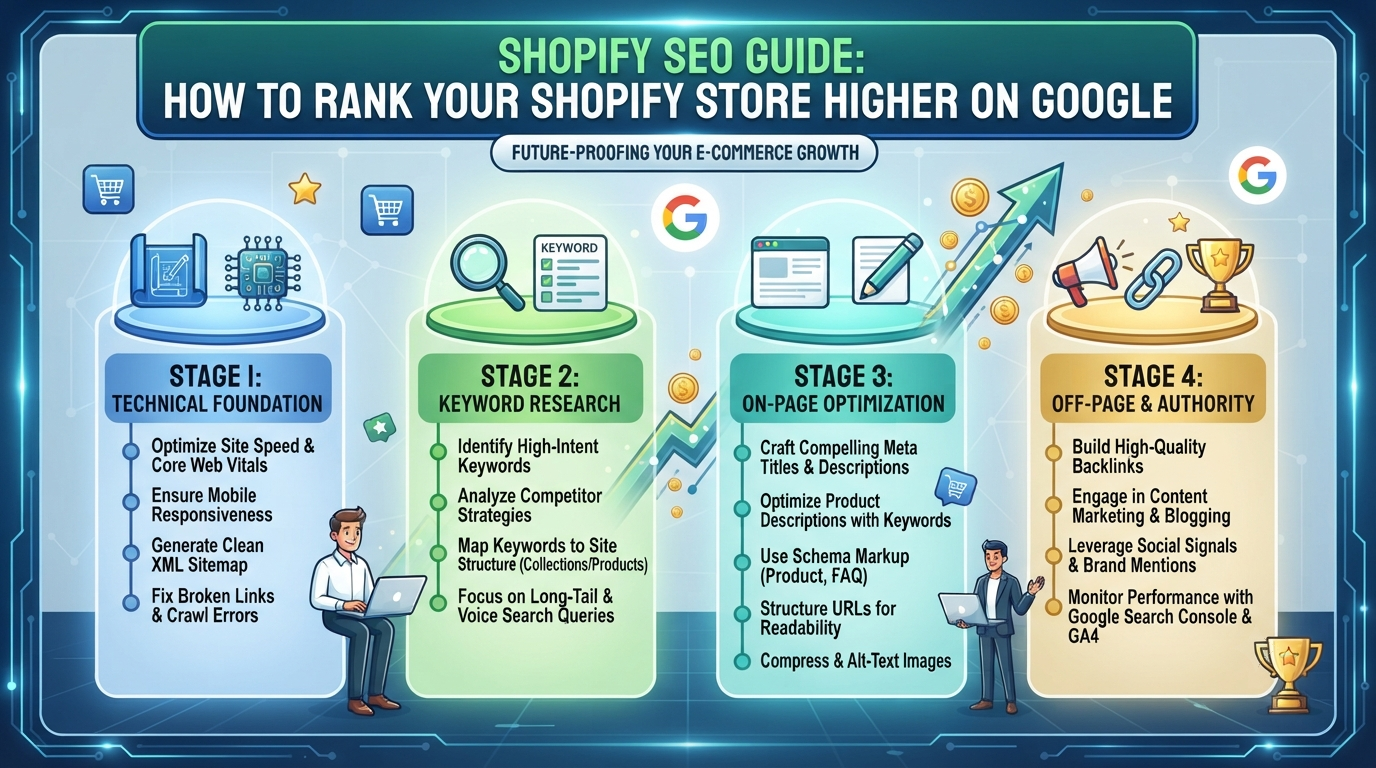
How to Do SEO for a Shopify Store Step by Step
- Doing search engine optimization for a Shopify store is a job that needs a good plan. This plan should make your store show up better in search results. Be easier for people to use.
- To do this you need to find the keywords make your product and collection pages better make your website faster write good content and link to other pages on your site.
- When your Shopify store is set up well for search engines they can understand what your website is about. You have a better chance of being near the top of the list, on Google.
Find Low Competition Keywords for Shopify
Finding competition keywords is really important for Shopify search engine optimization because it helps new stores show up on Google faster. You should not try to use keywords like shoes or fashion.
Instead you should focus on using keywords that’re more specific, like best running shoes for beginners or affordable fashion accessories online.
These keywords usually do not have much competition and they are more likely to result in sales.
Optimize Your Shopify Store Structure
Proper structure of Shopify store ensures ease of navigation by users and search engines. Proper categories, collection pages, and product pages should be organized to ensure that users have no problem in locating products within the site.
Create SEO Friendly Product Pages
Product pages that are SEO-friendly enable Shopify stores to rank well and attract customers that are targeted from the search engines. Each product page needs to have a unique title, description with keywords, good quality pictures, and structured headings. It is important to avoid copying the descriptions from the suppliers since that would lead to duplicate content which would negatively impact your rankings. Customer reviews, FAQs, and detailed product information are some ways of optimizing content for your product page.
Improve Collection Page SEO
The reason why collection pages should be included in SEO strategies is because they can reach wider keywords and categorize your products. The following elements need to be added when optimizing collection pages – keyword filled title, unique description, and internal linkings. Store owners often neglect optimizing their collection pages, hence reducing their chances of improving rankings. Including short informative text on top or at the bottom of a collection page will enable search engines to get a better understanding of that particular category.
Add Internal Links Correctly
Internal linking is very useful for connecting various pages in the Shopify site and making it easier for both users and search engines to navigate through it. The use of internal links on products, blog posts, and collections enables search engines to better index the website and pass authority to key pages. Internal linking can also ensure that visitors spend more time navigating through the Shopify site, thus improving their engagement. The use of descriptive anchor texts rather than “click here” improves the use of internal links.
Shopify On Page SEO Tips That Actually Work
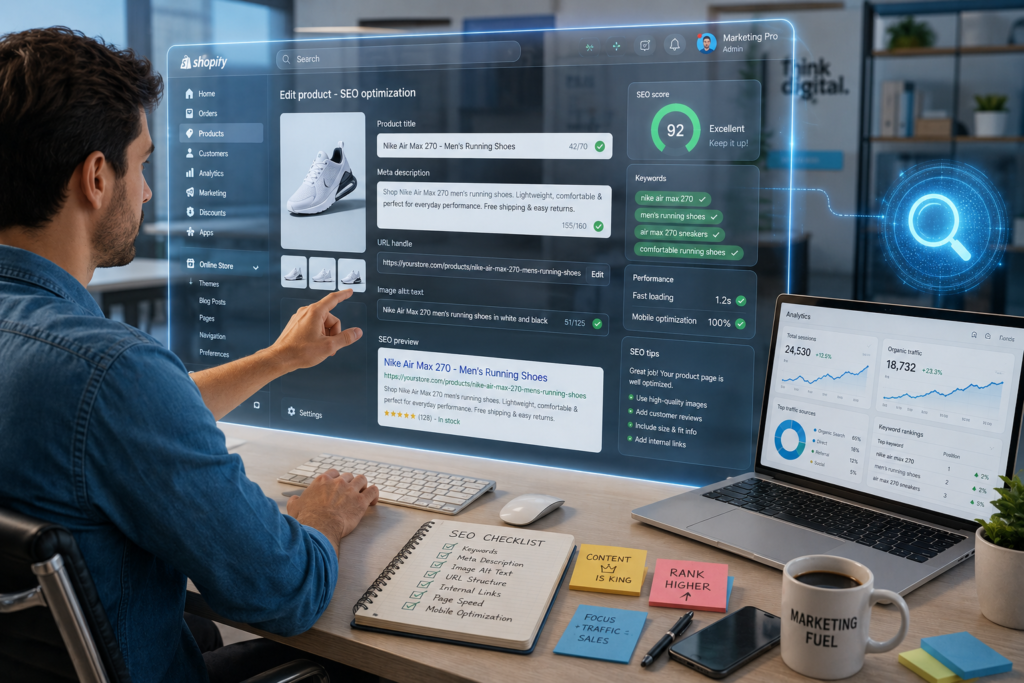
The on page SEO by Shopify will enhance the ranking of your store’s pages on Google and other search engines. The optimization of the pages will include optimization of the product title, meta description, images, URL, and content using keywords. Good on page SEO will make it easy for the search engines to understand the contents of your store and relate the same to users’ queries. A well-optimized store will bring you targeted organic traffic and high conversion rates.
Write SEO Optimized Product Titles
Product titles that are SEO optimized help the search engine and the customer understand what the product page is all about. The main keyword needs to be included in the product title without making it confusing for the user. Extra words that are not required, and stuffing keywords, need to be avoided as it can have negative consequences on the ranking of the site and the user experience. Including additional information such as the brand name, type of product, or any other feature can prove beneficial.
How to Use Meta Titles and Descriptions
The use of meta titles and descriptions is a very critical SEO practice when it comes to improving the appearance of Shopify pages on search engines. The meta title should be clear and descriptive, indicating what the page is all about, while at the same time including the targeted keyword. Meta descriptions, on the other hand, should offer meaningful information about the page and thus encourage the user to click on the page. While meta descriptions have no direct effect on search engine rankings, they may boost click through rate.
Optimize Shopify Images for Faster Loading
Optimization of images on Shopify stores is an important step in improving site performance and ranking. Big-sized image files make your site slower, which leads to users abandoning the page even before its full loading. Image compression without compromising their quality speeds up the process of loading and makes the whole site faster. Usage of relevant file names and keyword-rich alt attributes also contributes to better indexing of images by search engines. Faster loading pages provide better user experience and affect SEO performance positively.
Shopify SEO Optimization Mistakes to Avoid
Shopify store owners often miss out on ranking higher on Google searches because they commit SEO errors. SEO involves more than just putting in keywords; there’s technical SEO, content, and user experience. If all these aspects are not taken into account, search engines may find it difficult to get what your Shopify store is all about. Learning how to avoid SEO errors will help boost your rankings.
Keyword Stuffing Problems
Keyword stuffing occurs when a certain keyword is used too often in the titles, descriptions or content of a product in a way that looks artificial. Rather than being beneficial to your ranking position, it makes your content appear spam-like and hard to read for users. Google is able to recognize this and may actually lower your ranking since it prefers user-friendly content. The best way to go about it is by using keywords in user friendly content.
Ignoring Technical SEO
Ignoring technical SEO is a major mistake that affects how search engines crawl and index a Shopify store. Issues like missing sitemap setup, broken links, poor mobile optimization, and incorrect redirects can harm rankings. Technical SEO ensures that your website runs smoothly and is easy for search engines to understand. Without it, even well written content may not rank properly. Regular site audits and proper setup of tools like Google Search Console are important for maintaining strong SEO performance.
Using Poor Product Descriptions
Poor product descriptions can reduce both rankings and conversions because they do not provide enough useful information for users or search engines. Many Shopify stores use copied or very short descriptions, which leads to duplicate content issues and weak SEO performance. High quality product descriptions should be unique, detailed, and include relevant keywords naturally. Adding benefits, features, and usage details helps improve user trust and increases the chances of ranking higher in search results.
Slow Store Speed Issues
Slow store speed is one of the biggest SEO problems for Shopify websites because it directly affects user experience and rankings. If a store takes too long to load, visitors are more likely to leave before viewing products. Large images, unnecessary apps, and unoptimized themes are common reasons for slow performance. Improving speed by compressing images, removing unused apps, and using a lightweight theme can significantly boost SEO results and increase conversions over time.
How Long Does Shopify SEO Take?
SEO for Shopify is a process that will take some time, as the search engines have to crawl and index your website. For a newly set up store, it may take anywhere from weeks to months for your website to get some results in terms of rankings and traffic. But more advanced results such as having steady organic sales and ranking at the top of pages will take anywhere between 3 to 6 months.
Realistic SEO Timeline for New Stores
For a newly established Shopify website, it normally takes about 1-4 weeks to set up, do keyword optimization and fix SEO-related technical issues. In about 1-3 months, there will be some slight improvement in terms of impressions and ranking for low competition keywords. In 3-6 months, Google starts to trust your website and you get an increase in your organic traffic. It may take from 6 to 12 months for full SEO maturity, depending on your niche and quality of content.
Factors That Affect Shopify Rankings
There are a number of elements that determine the ranking speed of a Shopify store on Google. Some of these elements are keyword competition, quality of content, website speed, link building, and technical SEO setup. Stores operating in very competitive niches will take longer to rank than those operating in low competition niches. Google takes into account other user experience elements such as bounce rate, mobile-friendliness, and page loading time.
How to Speed Up SEO Results
SEO optimization of your Shopify store will give quicker results if you concentrate on methods that provide higher impact. Begin with keywords that have less competition and which are easier to rank for. Make sure each product page is fully optimized with relevant meta tags, unique descriptions, and fast loading images. Backlinking of high quality and creation of SEO blog articles will help you boost the authority of your website.
Final Thoughts on Shopify SEO
SEO of your Shopify website is not a fast process; rather it is a strong strategy to build up an online business in the long run. It will help you generate traffic organically and minimize dependence on paid advertising. In order to get success in SEO, you need to be consistent and do optimization in the right way. Rather than waiting for immediate results, concentrate on building up a strong base.
Simple SEO Strategy for Long-Term Growth
A simple strategy for Shopify SEO starts with proper keyword research and optimized product pages. After that, focus on creating helpful blog content that targets informational search queries. Improve internal linking between products, collections, and blog posts to strengthen site structure. Regularly update content and fix technical issues to maintain performance. Over time, this consistent approach helps build authority and improves rankings naturally without aggressive or risky tactics.
Key Takeaways for Beginners
For beginners, the most important thing is to understand that SEO is about consistency, not shortcuts. Focus on long tail keywords, write unique product descriptions, and improve site speed. Avoid common mistakes like keyword stuffing and duplicate content. Always think from the customer’s perspective instead of only search engines. A user friendly Shopify store with helpful content and proper optimization has a much higher chance of ranking successfully on Google.
Next Steps to Improve Your Shopify SEO
The next step is auditing your Shopify store and resolving the basic SEO problems initially. You need to start with improving the product pages, meta title optimization, and fast loading of your website. After that, you should concentrate on content development and backlinks to gain more authority. Analyze the results using services such as Google Search Console. SEO is a never-ending process; thus, constant updating and optimization are important for your Shopify store.